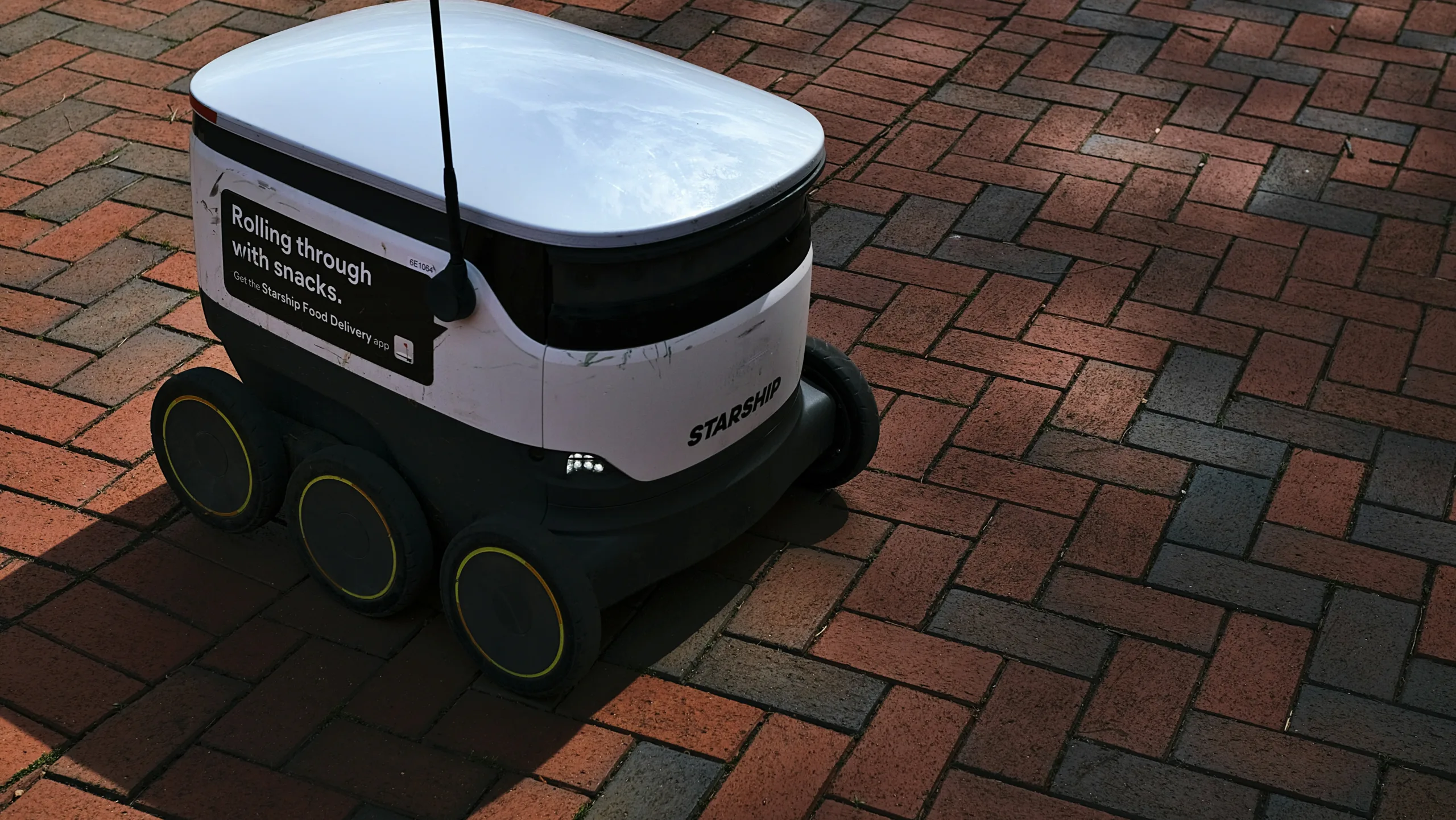

If you’ve been walking around London recently, you might notice something new rolling along the pavement — small autonomous delivery robots quietly making their way to customers’ doors. What started as a futuristic concept is now becoming a real part of urban life, and the impact is broader than just fast food deliveries.
In 2026, autonomous ground delivery robots are expanding rapidly across major cities, offering a practical and environmentally friendly alternative to traditional delivery vehicles. Here’s what you need to know about these robots, how they work, where you’ll see them, and why they matter.
What Are Autonomous Delivery Robots?
Autonomous delivery robots are small, self‑driving wheeled vehicles designed to move goods short distances, typically from a local hub to a customer’s address. They are guided by advanced sensors, cameras, and artificial intelligence that allow them to navigate streets and sidewalks safely.
Unlike drones, which face regulatory and safety hurdles in dense urban environments, these ground robots are easier to deploy and are increasingly accepted by local councils and transport authorities.
How They Work
Modern delivery robots in 2026 typically feature:
- AI navigation and obstacle avoidance to safely travel streets and shared pavements
- Secure, encrypted compartments that customers unlock with a unique code
- Real‑time tracking so users and operators can monitor progress
- Low‑speed travel to ensure safety around pedestrians and cyclists
When you place an order through a participating app, the robot receives delivery instructions and sets off from a local distribution point, such as a restaurant, shop, or micro‑fulfilment hub. The customer receives a one‑time code to open the robot’s storage compartment on arrival.
Where You’ll See Them
Autonomous delivery robots are already operating in cities across Europe, not just in London. Cities such as Zurich, Berlin, and Amsterdam host regular robot deliveries for food, groceries, parcels, and even pharmacy items.
In the UK capital, partnerships between technology providers and major retailers or delivery platforms mean you might see robots working for:
- Local food delivery services
- Grocery and convenience stores
- Some postal and courier companies
- Office and campus deliveries
As 5G and edge computing become more widespread, these robots are becoming more reliable and responsive, even in busy urban environments.
Why Robots Are Gaining Ground
Autonomous delivery robots offer several advantages over traditional delivery methods:
1. Lower environmental impact
Electric robots produce zero emissions at the point of delivery, reducing traffic pollution compared with vans, motorbikes, or cars.
2. Cost efficiency for businesses
Robots can help cut labour and fuel costs for last‑mile delivery, especially for small or frequent orders.
3. Safer urban use
In congested areas where drones are less practical due to safety concerns, ground robots operate at pedestrian‑friendly speeds and follow traffic rules.
4. Convenience for customers
Robots can be especially useful for time‑sensitive deliveries such as meals, prescriptions, or urgent documents.
Safety, Regulation and Public Acceptance
In 2026, regulatory frameworks have matured to support safe robot operations:
- City councils in London and other UK cities now include guidelines for robot paths on pavements and shared zones
- Speed limits and pedestrian priority rules are in place to minimise conflicts
- Data privacy regulations govern how delivery robots store and transmit location and delivery information
Public acceptance is also growing, though early concerns about sidewalk space and safety have led operators to refine robot behaviour for shared environments.
What It Means for the Future
Autonomous delivery robots are already reshaping how goods move in cities:
- Retailers can offer faster, greener delivery options
- Customers enjoy on‑demand convenience for everyday needs
- Cities can reduce urban traffic and emissions
But it’s not a robot‑only future. People still play essential roles in:
- Monitoring robot fleets
- Maintaining and repairing hardware
- Managing logistics and customer service
In fact, the integration of robots often creates new job opportunities in support, supervision, and operations — reinforcing that automation augments human work rather than replaces it entirely.
Final Thoughts
Autonomous delivery robots are no longer a sci‑fi concept. In 2026, they are a growing part of urban infrastructure — efficient, environmentally friendly, and practical for last‑mile logistics. Whether you’re grabbing a meal, picking up shopping, or waiting for a parcel, the future of delivery is rolling right past you.
So when you see that small robot trundling along, it’s not just a novelty, it’s part of a broader shift in how cities, businesses, and residents interact with technology.


0 Comments